
The Machine Stops: an analysis on a timely dystopia

Imagine, if you can, a dystopia in which the surface of the Earth has become inhabitable, with people living in technological environments underground. Does it sound familiar?
The post-apocalyptic underground life has become a common trope in science fiction. It is a rich survival scenario to explore: humanity is pushed to the limits of extinction, be it by our own actions or an external agent. In today’s age, this narrative has become urgent, and the list of possible end-of-the-world-as-we-know-it threats keeps growing.
The Machine Stops is cited as the first to feature this theme. It is a short story by E. M. Foster, better known for having written the classic A Passage to India. Foster is not often linked to science fiction, but The Machine Stops is regarded as one of the best of the genre. And I’m about to tell you why.
Better yet, you can read it and see for yourself! Then, you can come back for a deep dive about this story’s science, some historical facts, and what it says about our future.
This is the Science of Fiction.
WARNING: there will be SPOILERS.
Historical Context: the Machine’s tech
Right off the bat, in the first paragraph of The Machine Stops, we get a clear picture of a scene.
“Imagine, if you can, a small room, hexagonal in shape, like the cell of a bee. It is lighted neither by window nor by lamp, yet it is filled with a soft radiance. There are no apertures for ventilation, yet the air is fresh. There are no musical instruments, and yet, at the moment that my meditation opens, this room is throbbing with melodious sounds. An armchair is in the centre, by its side a reading-desk – that is all the furniture. And in the armchair there sits a swaddled lump of flesh – a woman, about five feet high, with a face as white as a fungus. It is to her that the little room belongs.”
Sounds normal, right?
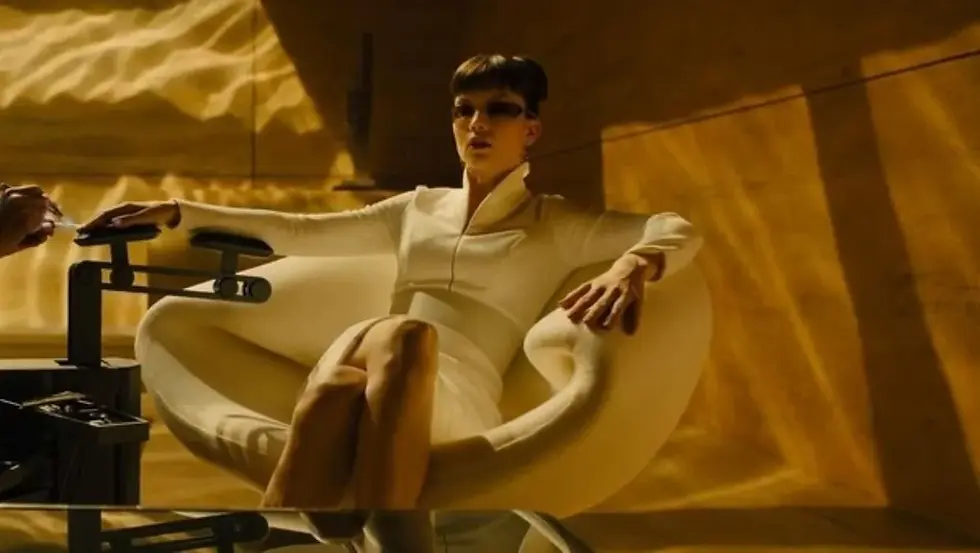
I want to put this piece of worldbuilding into perspective for a moment.
The Machine Stops is from 1909—over a hundred years ago! The technology and scientific advances described in this scene alone are truly beyond its time. Foster asked the reader to imagine, ‘if they can,’ because many would have trouble doing so. The description of a closed bright room, nowadays so common in futuristic stories, sounded incredibly mind-boggling back then.
In 1909, electricity was not yet widespread. The battle of currents, led by Thomas Edison and Nikolas Tesla, happened in the 1880s, with an underlined promise that electricity would become an essential part of our lifestyle soon. However, it was only in the 1910s that the infrastructure required to make this happen started to develop. Light bulbs powered by electrical cords would substitute gas lamps and candles in the decade after the publication of The Machine Stops.
No apertures but fresh ventilation predating the air conditioning and emanating melodious music before inbuilt speakers are also impressive predictions. And this is only the first paragraph!
The story is divided into three acts, or chapters; the first titled The Air Ship. In a first read, the details surrounding the flight in this act do not sound weird. “Air ship” instead of “airplane” could be a stylistic choice. But the first controlled flying machines had been idealized and built only a few years prior.* Commercial flights did not become a reality until at least 1914.
When a character remarks that “the air-ship barely takes two days to fly between me and you,” talking about two people on the opposite side of the world, it was not a small specificity natural of good prose, it expresses bewilderment about the comparative speed of flights against ships, the main mean of transportation for such a trip at the time.
However, the most ominous scientific prediction comes in the cataclysmic background. The surface of the Earth is poisonous to this civilization. The underground population needs respirators to visit the surface. Historically, these post-apocalyptic narratives appeared decades later as cautionary tales against the possibility of a nuclear war and, most recently, the threats of climate change. In 1909, these weren’t a concern at all. Nuclear power became a menace after World War II, and the first studies on climate change brought insight into its danger to our civilization only in the second half of the 20th century!
It is not only technological and scientific predictions that were accurate. The world building in The Machine Stops is profound. Foster got right even some tiny details, like the habit of acquiring knowledge through ten-minute video essays, or the idea of easy access to everything, bringing things to people instead of people to things.
There is one sentence, though, that hints that this is an older story. “Those who still wanted to know what the earth was like had after all only to listen to some gramophone, or to look into some cinematophote.” Admittedly, the terms ‘gramophone’ and ‘cinematophote’ aged badly.
*I’m Brazilian, so shout out to Santos-Dumond, a pioneer who built and flied the 14-Bis plane.
A timely tale
Thematically, The Machine Stops also transcends time and space.
The machine take-over in the story does not have a mastermind behind it. Humans developed the machine to make life easier, comfortable. The machine is not sentient. It is a system initially designed to improve quality of life.
At one point, society started to adjust to the machine, instead of the opposite. Deviations from the ways of the system were initially frowned upon. To appease the machine became cultural. In the beginning of the story, our main character, a woman named Vashti, reproaches the attitude of her son, Kuno, by saying, “It is contrary to the spirit of the age.” To which Kuno replies, “Do you mean by that, contrary to the Machine?”
Indeed. The protagonist is never portrayed as someone unaware of the situation, she is just complacent to it. The machine ended so many life-threatening scenarios, that it surely is worth having a few inconveniences to have it working ‘for her.’
“The bed was not to her liking. It was too large, and she had a feeling for a small bed. Complaint was useless, for beds were of the same dimension all over the world, and to have had an alternative size would have involved vast alterations in the Machine.”

The “the innovation is here, adapt to it” motto is something we can all relate today, a hundred and seventeen years later.
How we have advanced, thanks to the Machine!
As you may have guessed, society’s adaptation to the machine also meant disposing of the people who might rebel against it. Exile to the lethal surface becomes punishment for crimes committed against the machine. Homelessness, they call it.
Also, society openly adopts selective breeding. The undesirable traits in this eugenic practice are not those perceived as making an inferior kind of person, as it was, for example, in the Nazi regime. The ones being murdered were those who posed a threat to the machine’s way of life.
“By these days it was a demerit to be muscular. Each infant was examined at birth, and all who promised undue strength were destroyed. Humanitarians may protest, but it would have been no true kindness to let an athlete live; he would never have been happy in that state of life to which the Machine had called him; he would have yearned for trees to climb, rivers to bathe in, meadows and hills against which he might measure his body. Man must be adapted to his surroundings, must he not?”
Selective breeding is a very on-the-nose method of hampering rebellions against the system, but not the only one depicted in the story. Another more subtle one is to adapt facts and discourses to the system’s benefit. “Beware of first hand ideas!” an influential intellectual said. The legitimate way of analyzing history, he preached, is to bend the information in a way to benefit the machine. Today, this practice is known as post-truth.
“‘And in time’ – his voice rose – ‘there will come a generation that had got beyond facts, beyond impressions, a generation absolutely colourless, a generation
‘seraphically free
from taint of personality,’
which will see the French Revolution not as it happened, nor as they would like it to have happened, but as it would have happened, had it taken place in the days of the Machine.’”
I love how this passage is also a jab at the rising Logical Positivism thinking of the time, a theory that championed a scientific, empirically based philosophy and dismissed metaphysics, ethics, and individual perception as insignificant.
Life outside the machine becomes meaningless, literally. On several occasions, the characters comment about an idea or thought incongruent to the routine the machine set for them, remarking that the subversive acts conveyed no meaning to them.
And so, when faced with the machine’s downfall, the response is passivity.
“Time passed, and they resented the defects no longer. The defects had not been remedied, but the human tissues in that latter day had become so subservient, that they readily adapted themselves to every caprice of the Machine.”
Ok, enough spoilers.
Thinking about the main theme, it is timely because the machine is an allegory for many different things—AI, Capitalism, take your pick. Humans designed the machine to tend for their needs, then started to worship the machine, and finally they were the ones tending to the needs of the machine.
This story is not about authoritarianism. There’s no one in power, no human forcing their own agendas onto others. It is about pledging alliance to a system and losing sight of the original goal to which it was created.
That the Machine may progress, that the Machine may progress, that the Machine may progress eternally.
###
That’s it for today, folks.
I am still amazed that this rich tale was written in 1909, and I keep wondering about what could have led Foster to write it. This was before the World Wars, before the Nazis, nuclear bombs, and any other context that would be explored in thematically similar science fiction stories later.
However, there is one cultural movement that comes to mind. Coincidently or not, The Machine Stops was published nine months after Manifesto of Futurism, a controversial document that proposed a future beyond the past, post-human — an ode to the machines.
If it is indeed a reaction to this movement, I cannot say. But the fact is that Foster’s thought experiment was an exercise in creativity, in imagining a future truly beyond its time, a future built upon futuristic ideals.
See you next post,
Ra
Carla Ra is a scientist by day, sci-fi writer by night.
You can check out her flash fiction collectio SCI-FI WEEKATHON for FREE here.


I read The Machine Stops a few years ago. It is one of the better pre-world-war, dystopian novels. It certainly captures the incredible sedintaryness and isolation of the current world where many of us spend hours online, playing video games, or watching television. The situation it describes bears a disturbing similarity to the Covid 19 Pandemic. Forster's world, as Orwell's in 1984, seems unrealistically extreme until one realizes it is the product of the human race having its original environment completely destroyed. As with most of elite authors, Forster's fiction is mostly concerned with the thoughts and feelings of his protagonist and with the offensive nature of society. Action is almost absent, there is no heroism, and an incredible passivity overspreads…